
 Image 1 of 5
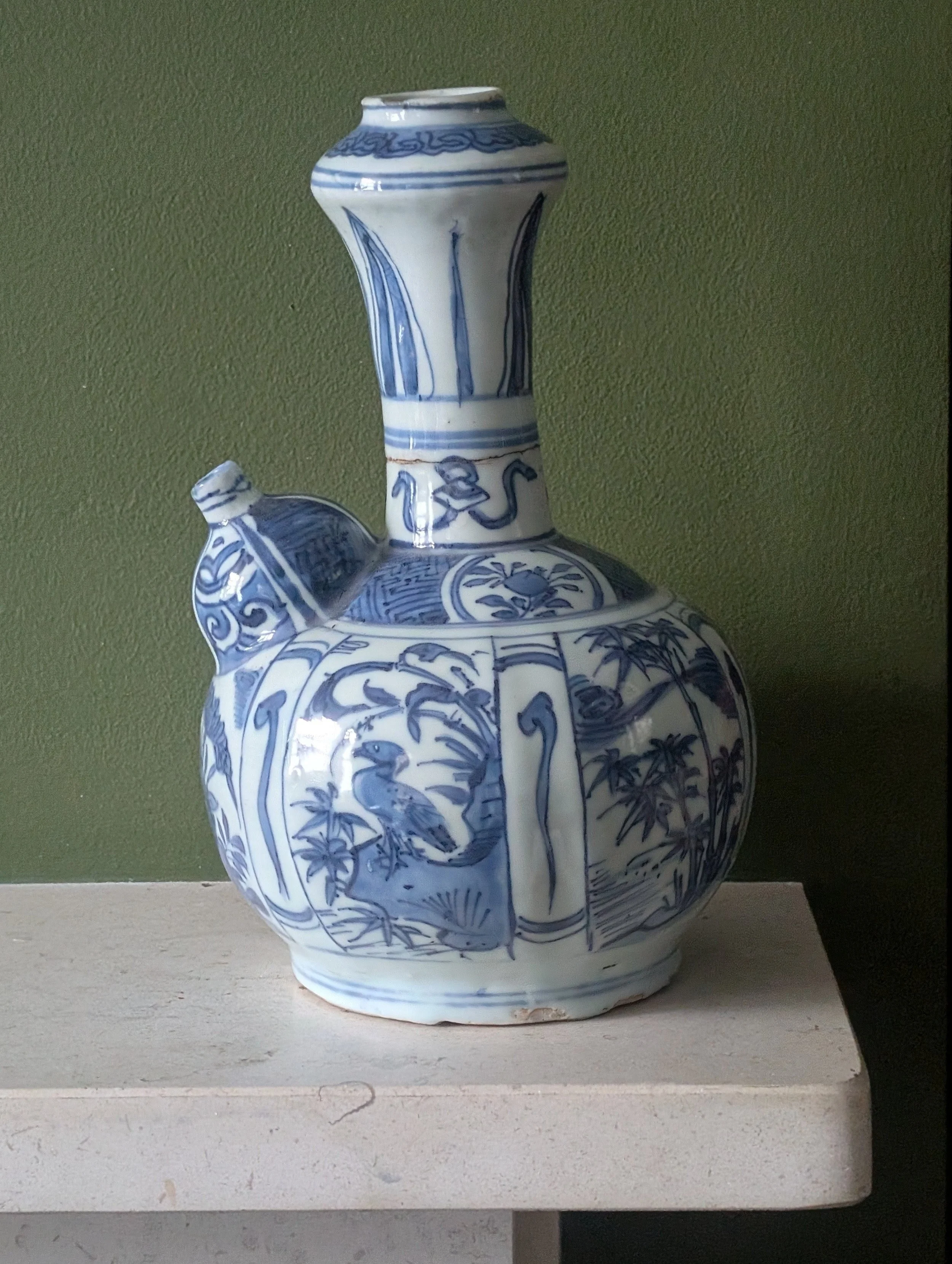 Image 2 of 5
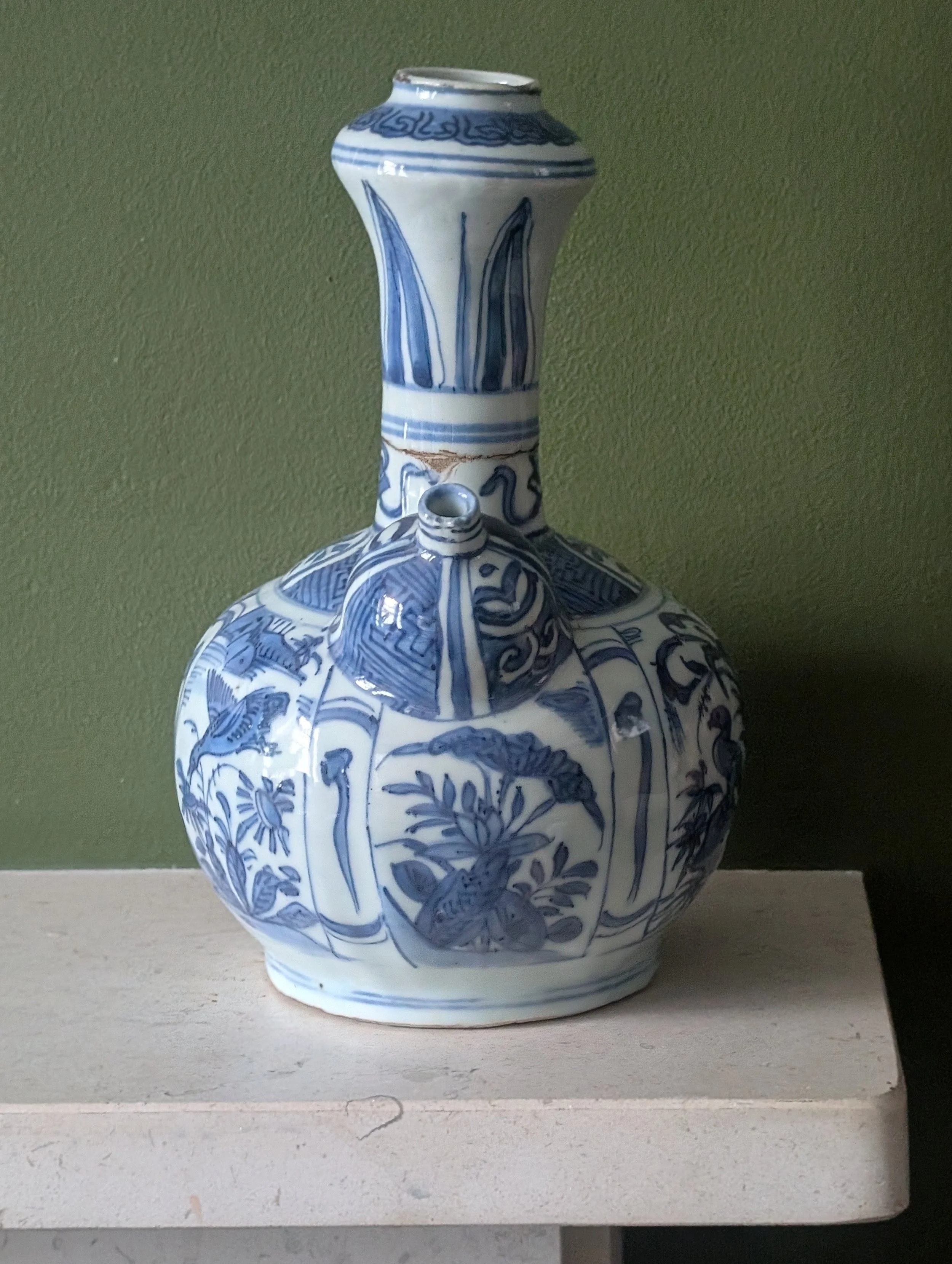 Image 3 of 5
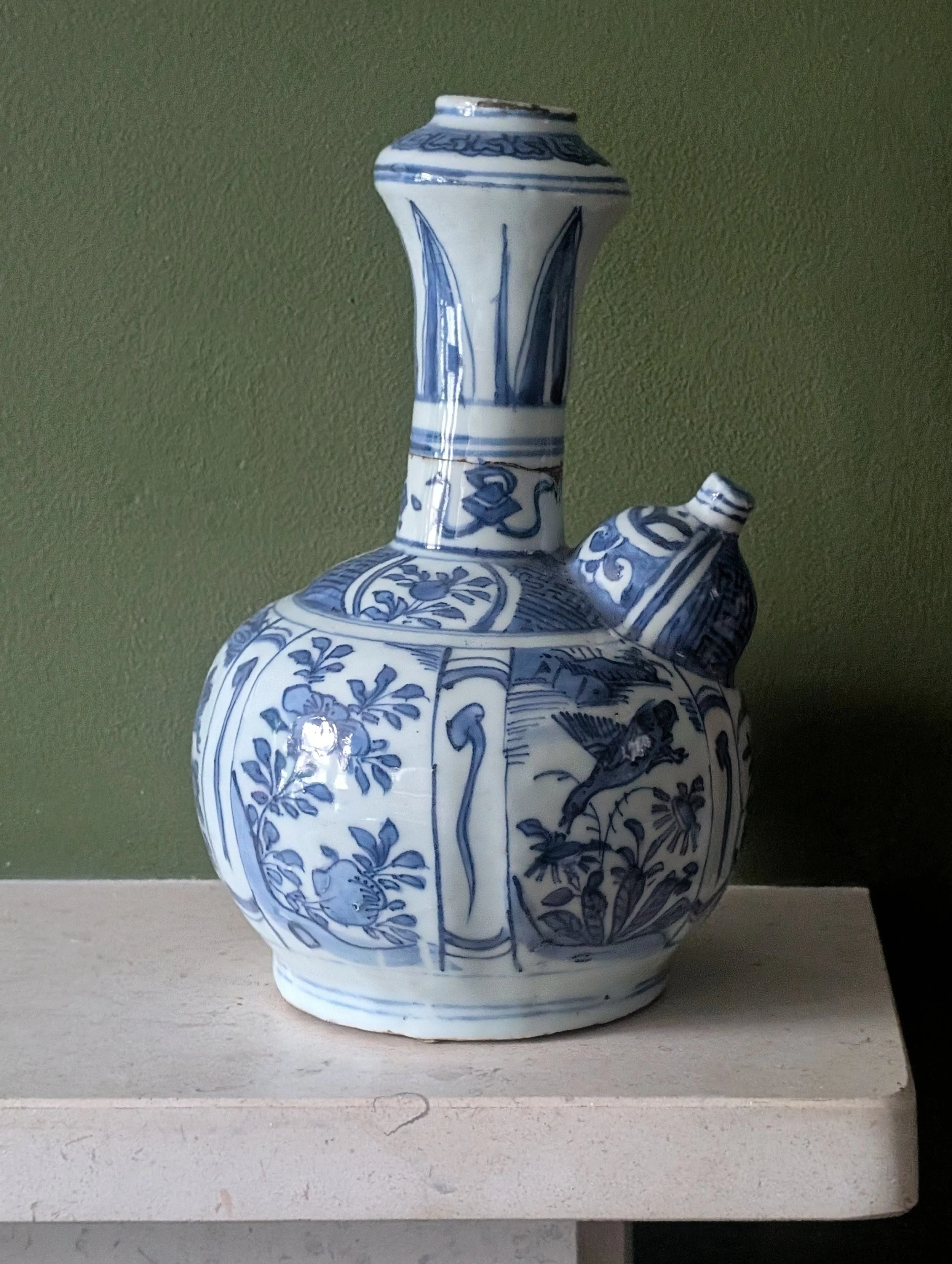 Image 4 of 5
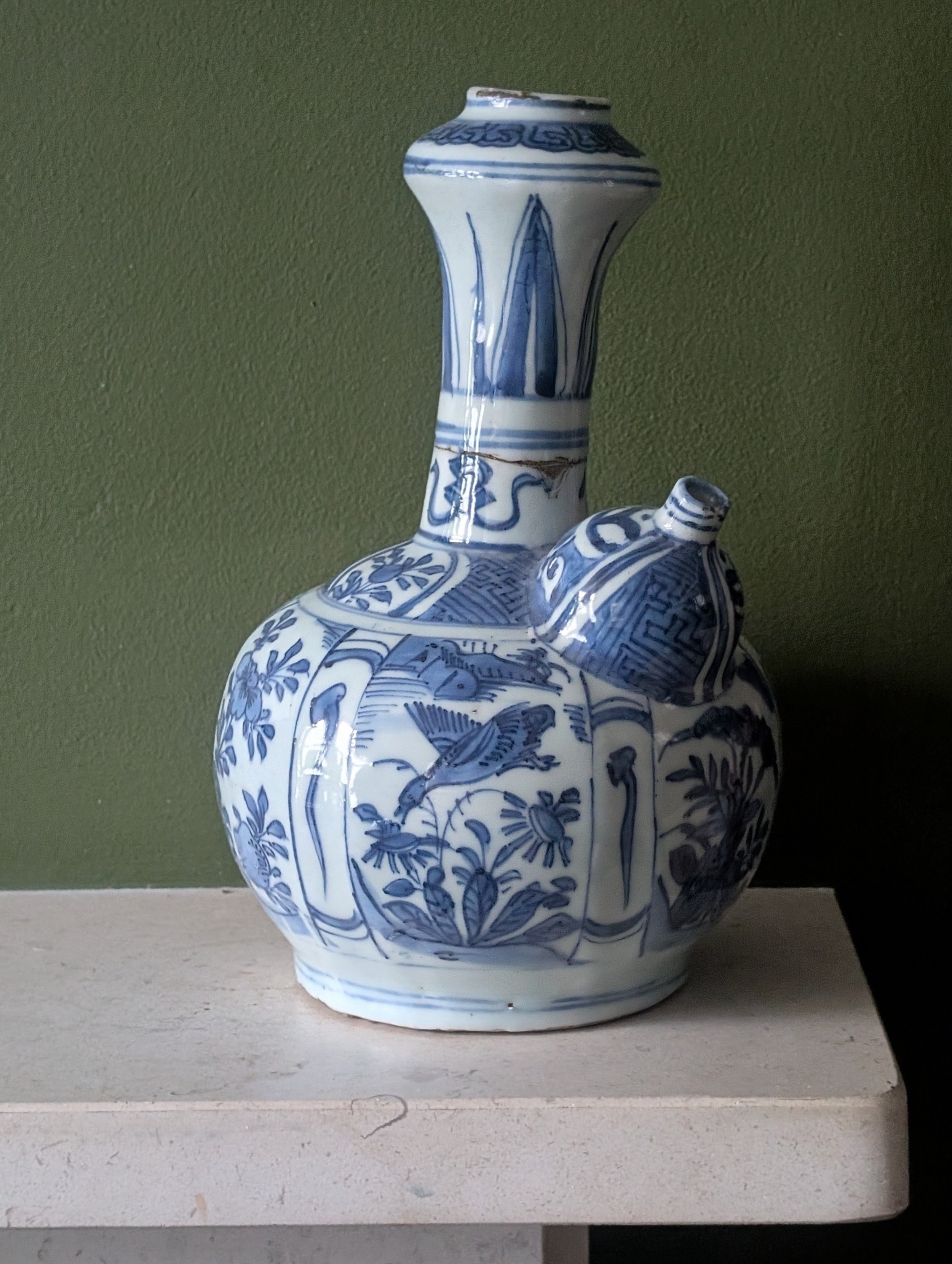 Image 5 of 5
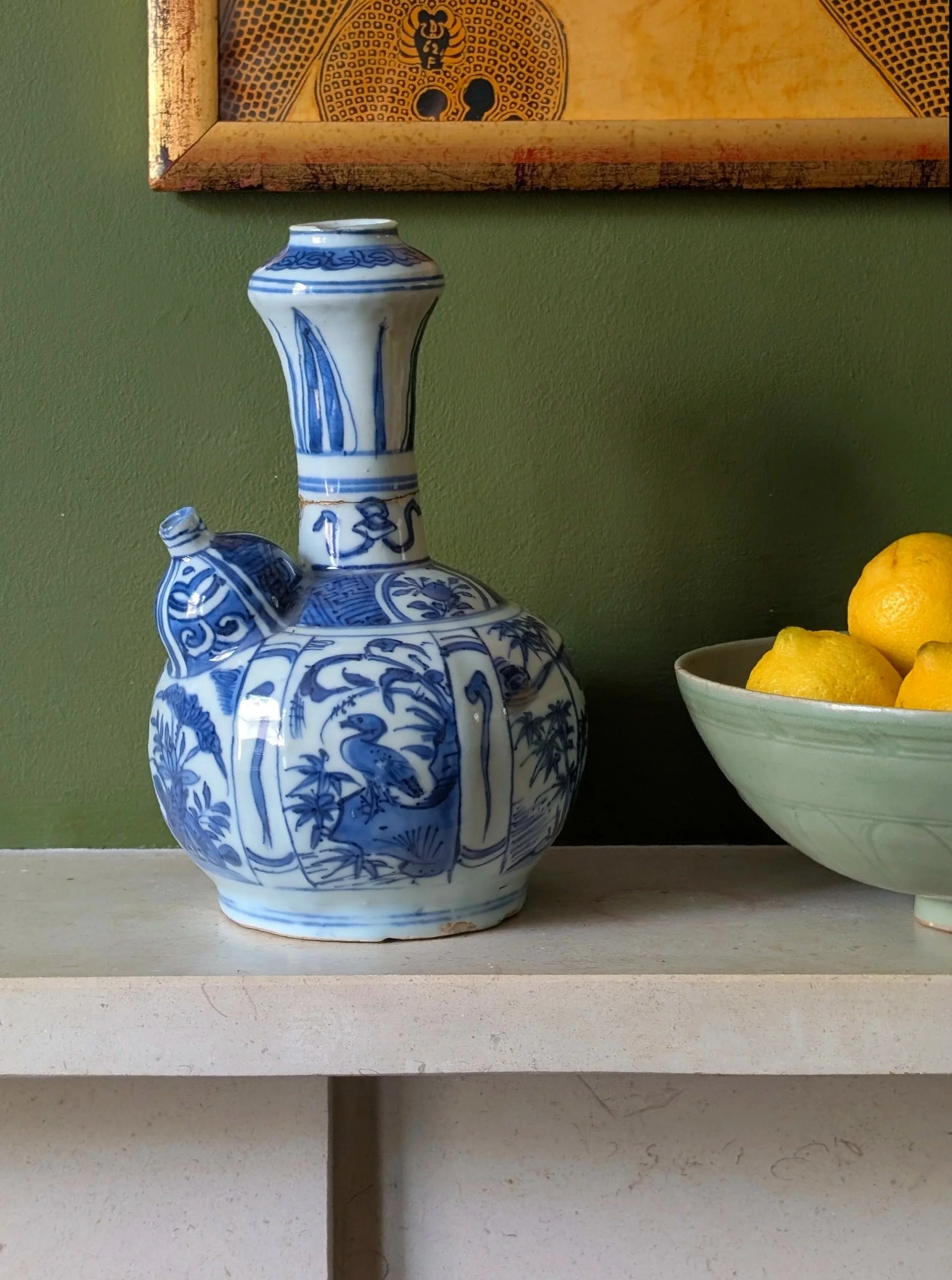
A blue and white kendi with a globular body, a bulbous spout and a tall neck, painted with panels of ducks in a wild riverside landscape and geometric patterns
Ming dynasty, Wanli period (1572 - 1620)
22.5cm
The word kendi comes from the Sanskrit word kundikā and means 'water vessel'. The form originated in Southeast Asia, where metal vessels of this type were commonly used in Buddhist purification practices. It travelled to China along the Silk Road during the Han dynasty and ended up being reproduced it the medium of pottery and porcelain, mostly by kilns in Fujian, Jiangxi and Guangdong. From the Song and Yuan dynasties onward, ceramic kendi were also widely exported as trade wares back to Southeast Asia, where they originated from.
A blue and white kendi with a globular body, a bulbous spout and a tall neck, painted with panels of ducks in a wild riverside landscape and geometric patterns
Ming dynasty, Wanli period (1572 - 1620)
22.5cm
The word kendi comes from the Sanskrit word kundikā and means 'water vessel'. The form originated in Southeast Asia, where metal vessels of this type were commonly used in Buddhist purification practices. It travelled to China along the Silk Road during the Han dynasty and ended up being reproduced it the medium of pottery and porcelain, mostly by kilns in Fujian, Jiangxi and Guangdong. From the Song and Yuan dynasties onward, ceramic kendi were also widely exported as trade wares back to Southeast Asia, where they originated from.